Developed a prototype for a pitch-changing mechanism for a lap-steel guitarSteel Guitar Real-Time Tuning Mechanism
Project Overview
This project focused on designing and prototyping a mechanical tuning mechanism that allows the pitch of a lap steel guitar string to be changed in real time during performance. The design was intended to provide some of the expressive pitch-bending capability of a pedal steel guitar while maintaining the lower cost, portability, and simplicity of a lap steel guitar.
Pedal steel guitars allow musicians to dynamically bend notes but are substantially more expensive and mechanically complex than lap steel guitars. The project therefore explored whether a compact mechanism could be added to a lap steel guitar to mechanically alter string tension without interrupting the player's picking rhythm.
The project progressed through the complete engineering design process, including patent research, brainstorming, concept evaluation, CAD development, analytical modeling, prototyping, and experimental testing.
My Contributions
● Project Management: Organized weekly meetings to evaluate development progress and introduced a weekly project backlog, providing visibility into project progress and outstanding action items. Team members used a pull-based assignment system to select responsibilities from the remaining tasks.
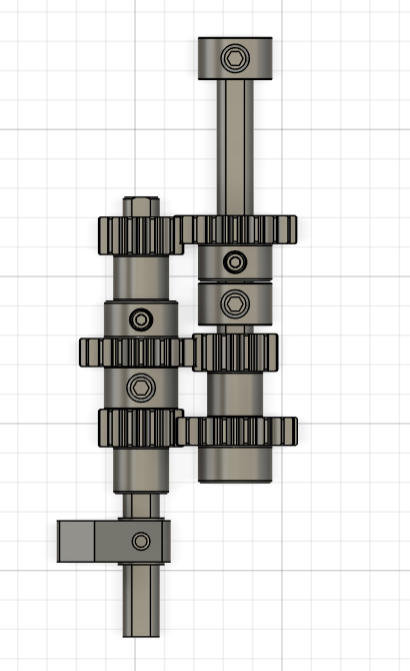
● CAD & Mechanical Design: Created the CAD models for all system components except the linkage components, translating the selected concept into manufacturable geometry and developing the components required for the gear train, string-presser mechanism, and supporting assembly.
● Dynamics Modeling: Performed the dynamic analysis of the complete mechanism, modeling the lever, linkage, compound gear train, string presser, and return spring as a one-degree-of-freedom system. Developed the component kinematics and energy expressions and applied Lagrangian mechanics to derive the system's equation of motion. The resulting model was used to evaluate the required input torque, lever operating range, equilibrium position, and effects of the compound gear reduction.
● Concept Evaluation & Research: Developed the Pugh matrix used to systematically evaluate the proposed design concepts and support selection of the final mechanism. Also collaborated on patent research to identify existing approaches to real-time guitar pitch adjustment and inform the team's early concept development.
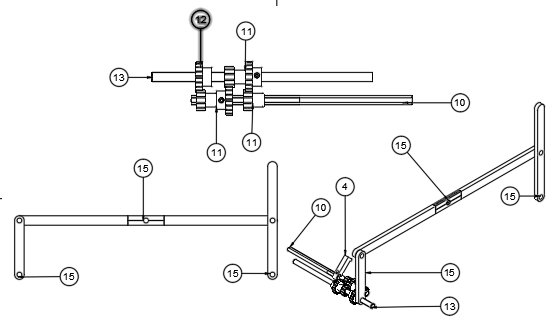
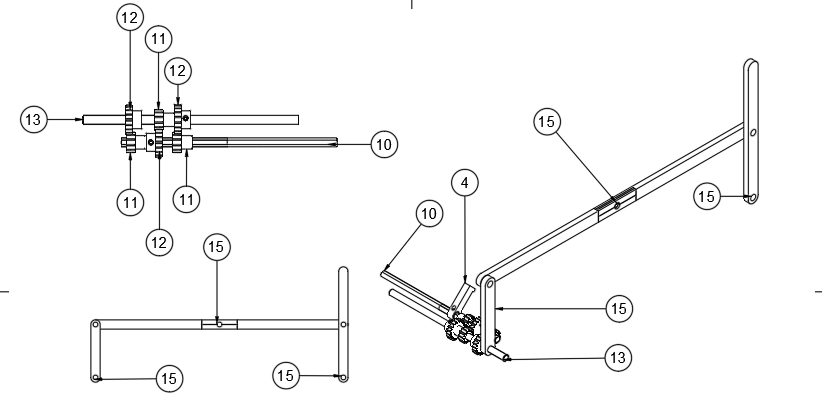
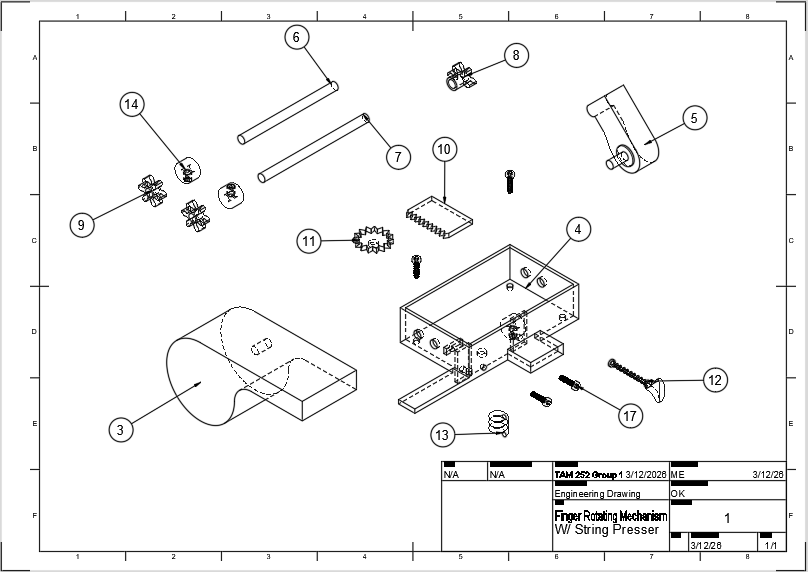
● Engineering Documentation: Produced all engineering drawings and exploded assembly views for the project, documenting individual components and communicating how the complete mechanical system was assembled.
● Prototyping & Assembly: Collaborated in the 3D printing, fabrication, and assembly of the physical prototype, helping translate the CAD design into a functional mechanism for experimental testing.
Design & Concept Development
Initial development began with research into existing guitar pitch-control mechanisms. Patents involving cam-driven string benders, foot-pedal tension adjustment, and motorized pitch-control systems were studied to understand how existing designs transmitted force to guitar strings and enabled pitch changes.
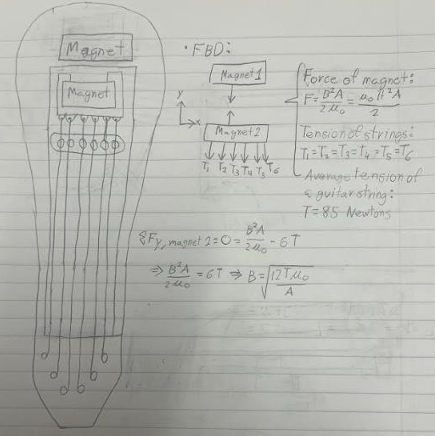
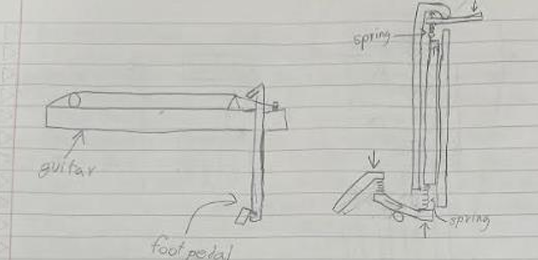
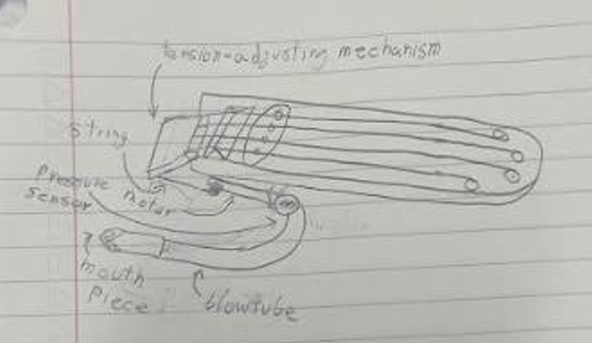
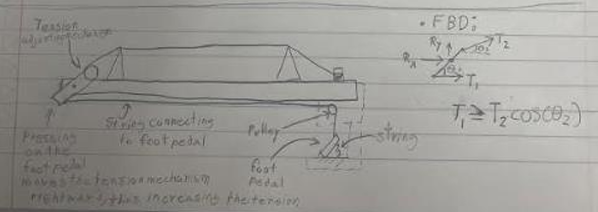
From this research, the team generated a broad range of concepts, including magnetic actuation, foot-pedal systems, a blow-activated motor, pulley-and-lever mechanisms, tuning fingers, string handles, and manually operated string-tensioning devices.
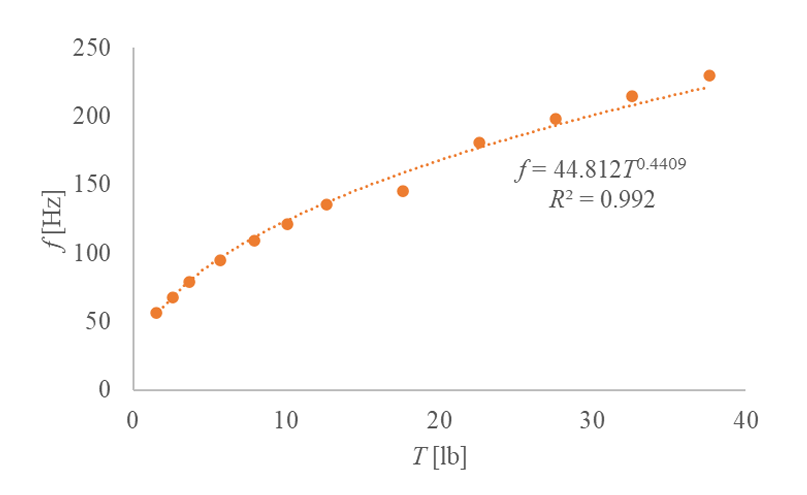
Each concept considered a different method of changing either the tension or effective vibrating behavior of the string. Early sketches were accompanied by basic mechanical calculations to determine whether the underlying concepts were physically feasible. For example, several concepts used the relationship between string tension and vibration frequency to establish how mechanically increasing tension could raise the resulting pitch.
Concept Selection
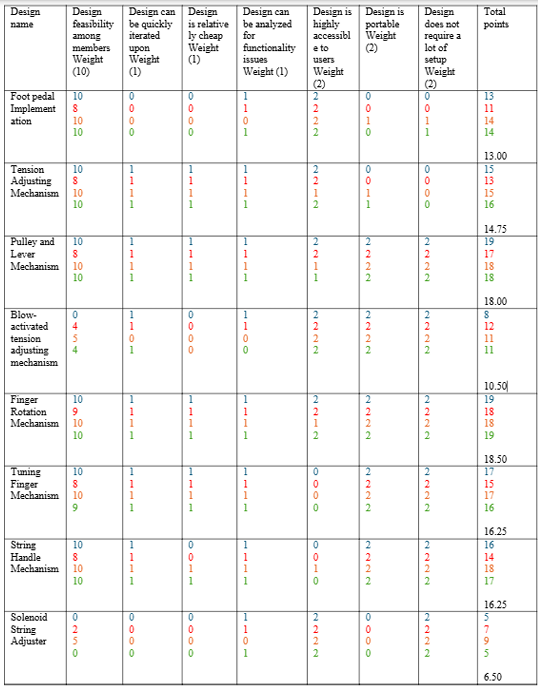
The proposed designs were evaluated using a Pugh matrix incorporating seven design criteria. Particular emphasis was placed on mechanical feasibility, portability, accessibility, modifiability, ease of manufacturing, and ease of setup. This systematic comparison allowed the team to move from a broad collection of concepts toward a mechanically simple solution that could be fabricated and tested within the project's constraints.
The selected concept was a hand-operated finger-rotation/string-presser mechanism. Unlike the pedal-based concepts, the mechanism could be mounted directly to the lap steel guitar and operated using the player's free hand. It also avoided the electronics and control systems required by the motorized concepts.
Design Development
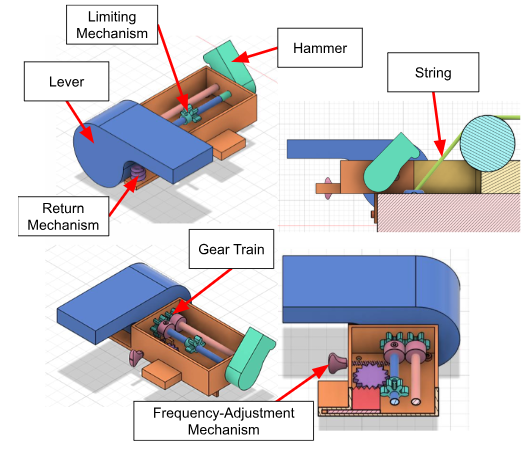
The selected concept was developed into a mechanical assembly consisting of three primary subsystems:
Lever-Linkage
Compound Gear Train
String-Tuning Mechanism
Pulling the lever transmits motion through the linkage to a compound gear train. The gear train drives a hammer-like string presser, which rotates downward and contacts the guitar string. The resulting string deformation increases its tension and therefore raises its pitch.
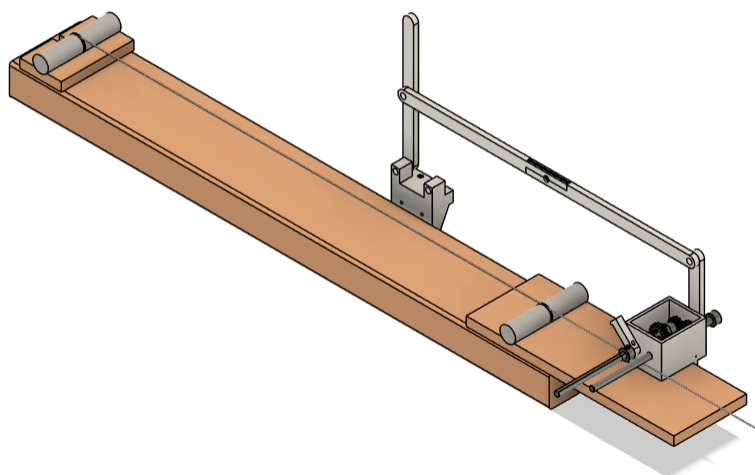
The design was developed in CAD to establish the geometry and packaging of the gearbox, gears, shafts, lever, linkage, spring, housing, and string presser. An engineering drawing was also produced to document the relationship between the individual components.
The design emphasized rapid prototyping and manufacturability, with many custom components designed for additive manufacturing. Early design planning specifically considered PLA because the material allowed components such as the housing, gears, and structural elements to be manufactured quickly and iterated with relatively little material waste.
Solid Mechanics Analysis
Engineering analysis was used to connect the desired musical output to the mechanical requirements of the device.
The relationship between string frequency and tension was first used to determine the change in string tension required to produce the desired pitch shift. The design analysis targeted a change from approximately 207.65 Hz to 220 Hz. From experimental string data, the corresponding tensions were calculated as approximately 144.1 N and 164.2 N.
The required change in string length was then converted into strain, and Hooke's law was used to relate the required strain to stress.
This analysis established the mechanical loading requirement that the string-presser assembly needed to produce and provided a quantitative basis for evaluating the mechanism rather than relying solely on geometric design.
Dynamics Modeling
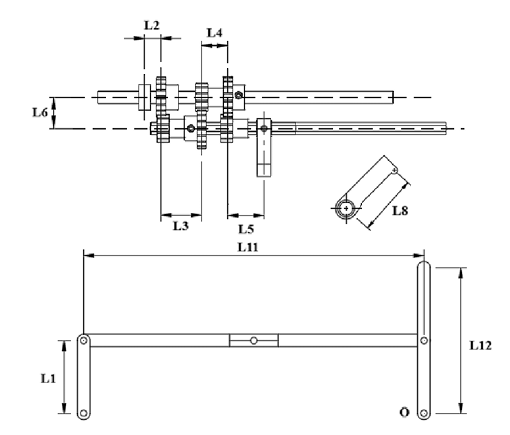
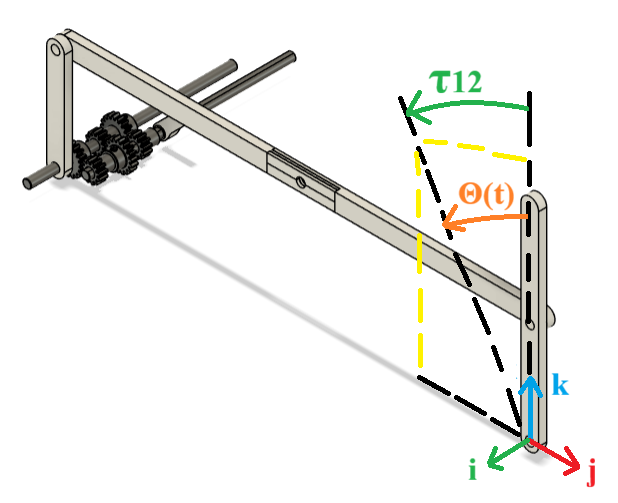
The complete mechanism was also modeled as a one-degree-of-freedom dynamic system, with the lever angle defining the motion of the interconnected components.
Gear ratios were used to relate the rotation of the lever to the rotations of the successive compound gears and ultimately the string presser. Position and velocity vectors were derived for the moving components, allowing the kinetic and potential energies of the system to be formulated.
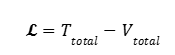
The system Lagrangian,
was then used to derive the governing equation of motion. The resulting model incorporated the masses and moments of inertia of the components, gear reduction, gravity, and the torsional return spring.
The analysis was used to predict the required input torque, fully actuated lever position, and unloaded equilibrium position. It also revealed an important design issue: the compound gear train provided excessive reduction, resulting in a predicted lever movement of only approximately 2.38 degrees to reach the intended loading condition. This indicated that reducing the gear ratio would provide better tactile feedback and improve the usability of a future iteration.
Prototype & Experimental Testing
A physical prototype was manufactured and integrated into a lap steel guitar test platform. The completed mechanism demonstrated that the lever, linkage, gear train, and string presser could work together to mechanically alter the pitch of the string during operation.
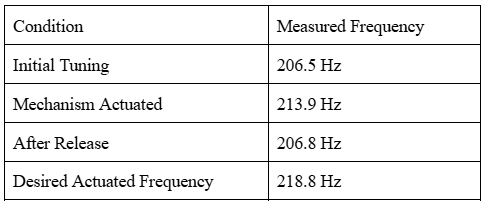
Performance was evaluated by measuring the string frequency before actuation, while the mechanism was engaged, and after release.
The results from the experiment found that the prototype successfully produced a measurable real-time increase in pitch. However, the actuated frequency was approximately 39.1 cents flat relative to the desired +100-cent pitch change.
The return behavior was considerably more successful. After releasing the mechanism, the string returned to within approximately 2.5 cents of its original pitch, demonstrating strong return-to-tuning repeatability.

Engineering Takeways
The project demonstrated the importance of connecting analytical engineering models with physical prototype behavior. Although the prototype did not achieve the full targeted pitch change, it successfully demonstrated the fundamental concept: a compact mechanical attachment could change a lap steel guitar's pitch in real time and return the string very close to its original tuning.
More importantly, experimental testing exposed limitations that were difficult to capture analytically. Backlash, component compliance, manufacturing tolerances, and alignment all affected the real mechanism's force transmission. The resulting discrepancies provided clear directions for a second design iteration and demonstrated why successful mechanical design requires both analytical validation and physical testing.
Tools & Skills: Autodesk Fusion • concept generation • mechanism design • iterative design • gear trains • linkage design • solid mechanics • stress-strain analysis • rigid-body dynamics • Lagrangian mechanics • patent research • Pugh matrices • concept evaluation • failure analysis • exploded assemblies • engineering drawings • bill of materials • experimental frequency measurement • prototype validation