Autonomous Walking Robot
Developed an autonomous walking robot capable of simultaneously transporting and dispensing Starburst candies
Overview
The Autonomous Walking Robot was a semester-long engineering design project focused on developing an autonomous walking robot capable of simultaneously transporting and dispensing Starburst candies. The project began with the goal of creating a convenient and engaging snack-delivery system for university students experiencing high workloads and stress. The final design combined a playful puppy-inspired user experience with a mechanically driven walking and dispensing system.
My Contributions
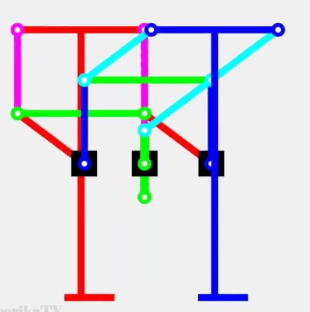
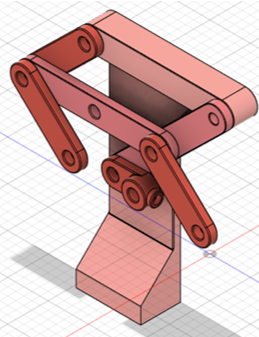
● Walking Mechanism Design: Designed and iterated the Chebyshev-linkage leg system and supported its integration into the robot.
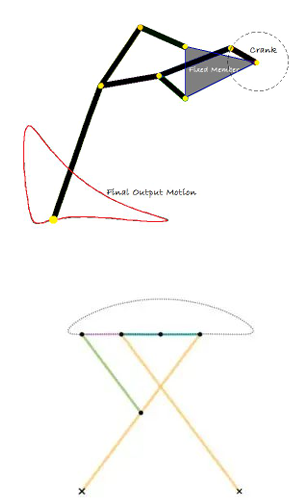
● Kinematic Analysis: Performed position, velocity, and acceleration analysis to evaluate the linkage gait and characterize the robot's expected motion.
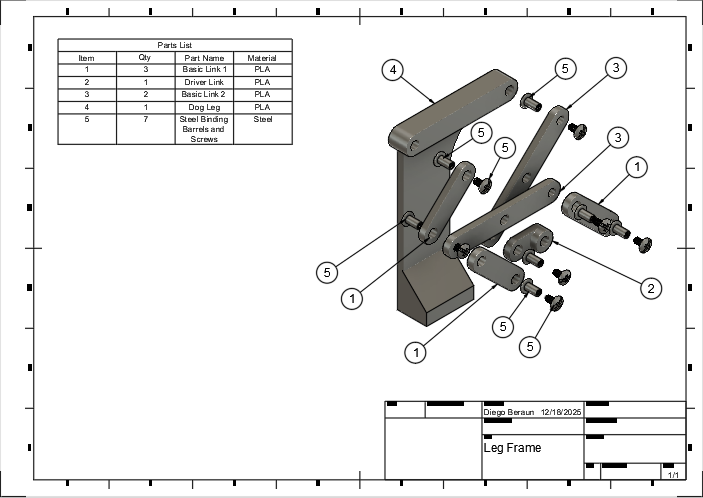
● CAD & Design Iteration: Contributed to CAD assembly development, dimensional revisions, and design improvements during prototype integration.
● Manufacturing & Assembly: 3D printed component casings and assisted with fabrication, assembly, and troubleshooting of the physical robot.
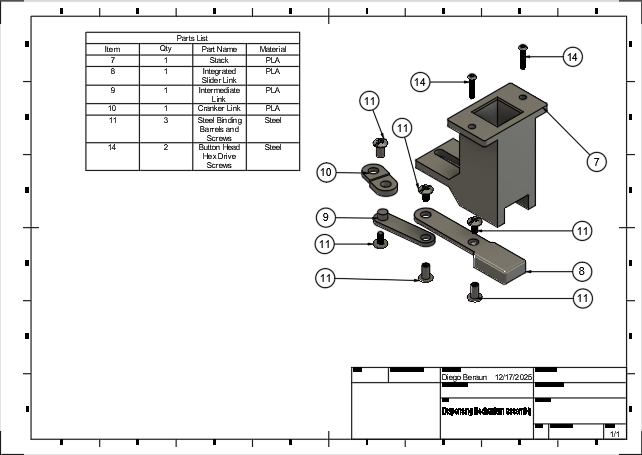
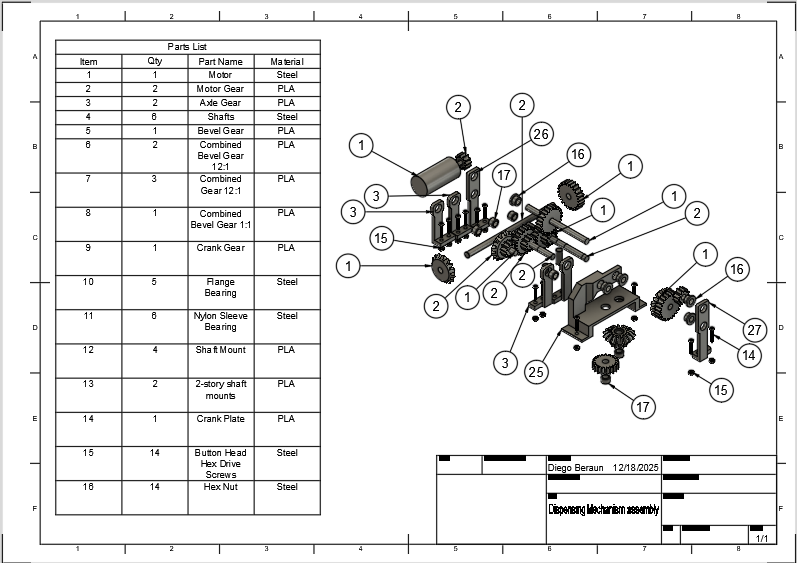
● Engineering Documentation: Produced exploded-view/disassembly documentation and contributed to technical presentations and gait descriptions.
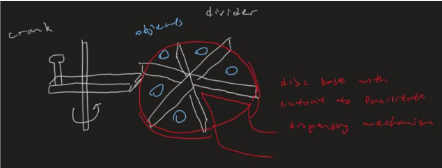
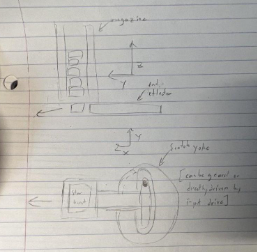
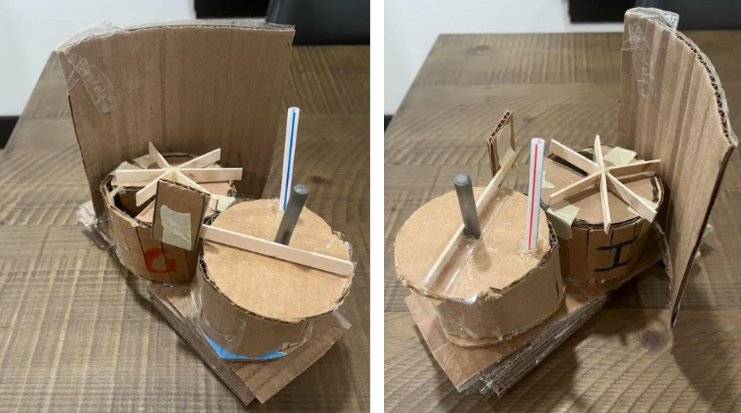
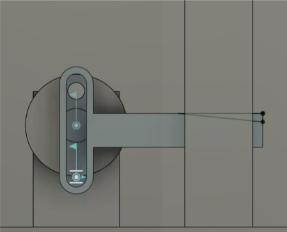
Dispensing Concept Development
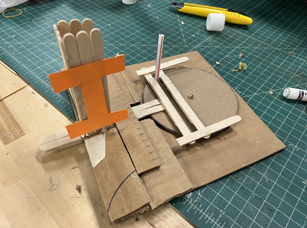
The design process began by exploring different objects and mechanisms suitable for automated dispensing. Starbursts were selected because their small, rectangular geometry made them well suited for controlled storage and indexing. Several dispensing concepts were evaluated, including bubblegum-style mechanisms, conveyor belts, funnels, and Scotch-yoke mechanisms. Early cardboard and popsicle-stick prototypes were used to investigate these concepts before the design converged on a crank-slider mechanism because of its simplicity, reliability, and ease of integration.
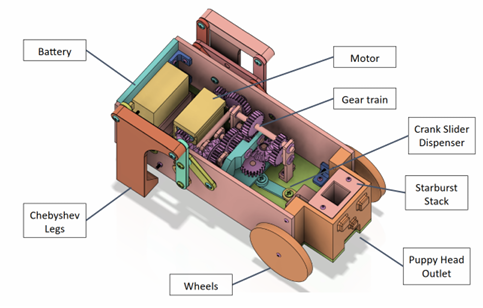
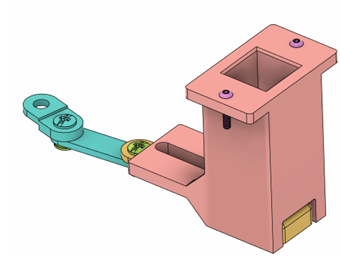
The dispenser was ultimately incorporated into a puppy-shaped housing so that the candy would be pushed through the puppy's mouth. A gravity-fed stack stored the Starbursts, while a slider driven by the crank mechanism dispensed the bottom candy individually. The design was developed through CAD modeling and multiple 3D-printed prototypes, allowing issues involving indexing, jamming, component fit, and mechanical tolerances to be identified and addressed.
Walking Concept Development
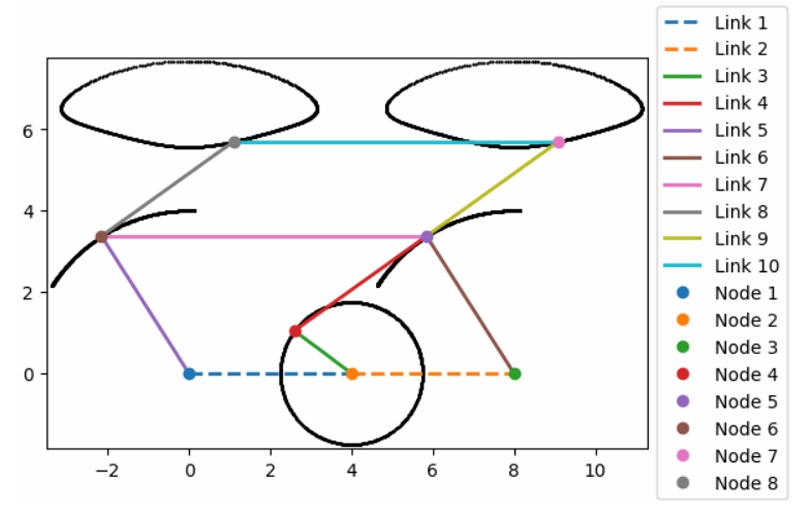
The second phase of the project expanded the dispenser into a mobile robotic platform. Klann and Chebyshev walking mechanisms were investigated and compared based on complexity, stability, size, weight, and suitability for indoor operation. A Chebyshev linkage was selected because its compact geometry and relatively simple construction were appropriate for the flat indoor environment required by the project.
The final robot used two six-link Chebyshev leg mechanisms operating 180 degrees out of phase with a 50-50 duty cycle. Each leg produced a 9.96 cm stride, resulting in 19.92 cm of travel per complete walking cycle. Position, velocity, and acceleration analysis was used to study the linkage trajectory, gait, and required operating speed.
Drivetrain and System Integration
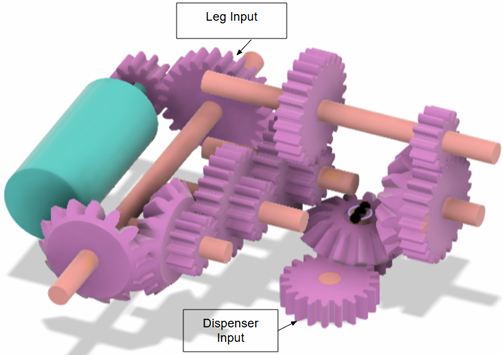
One of the primary engineering challenges was operating both the walking and dispensing mechanisms from a single motor. A drivetrain consisting of spur and bevel gears was developed to divide the motor input between the two subsystems. The walking mechanism used a 2:1 motor reduction, while additional gearing reduced the dispenser speed so that one Starburst would be released approximately every two meters traveled. Testing revealed significant differences between theoretical and physical performance due to friction, loading, compliance, and manufacturing variation, requiring the gear train to be iteratively modified.
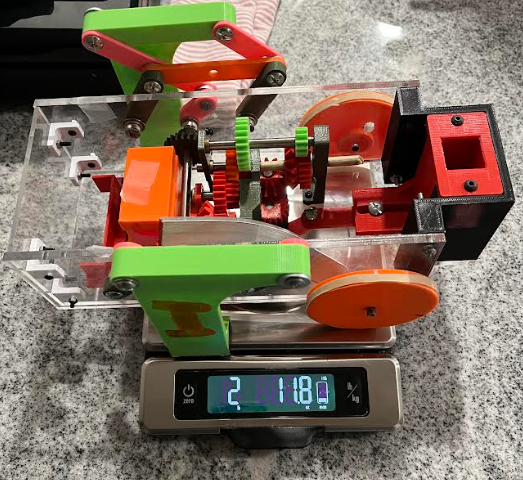
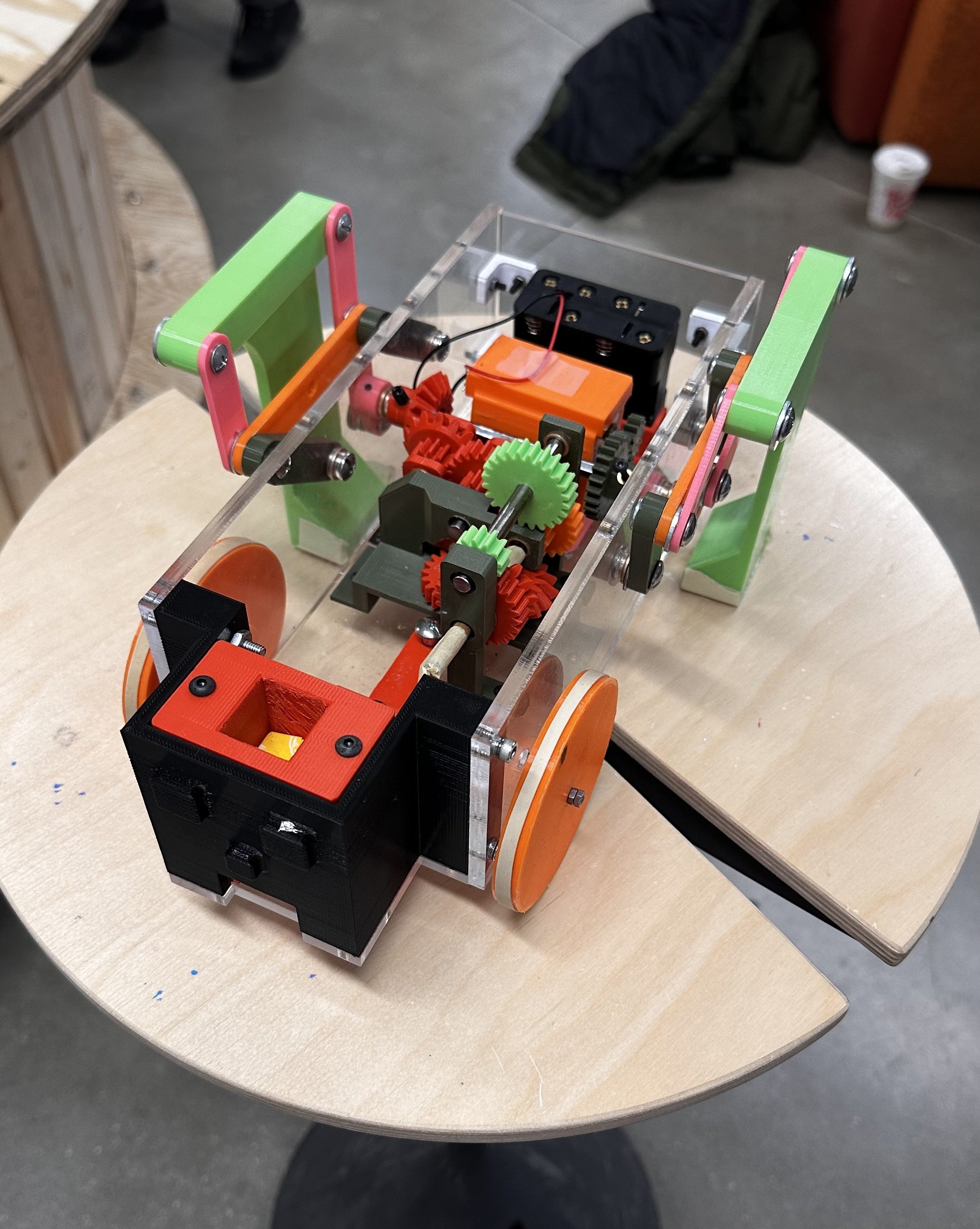
The complete system integrated the motor, battery, drivetrain, Chebyshev legs, passive support wheels, Starburst dispenser, and acrylic chassis into a robot approximately 29.1 × 17.6 × 13.5 cm. Rapid-prototyping methods including 3D printing and laser-cut acrylic allowed components to be redesigned and manufactured quickly as problems were discovered.
Testing & Design Iteration
Physical testing revealed several challenges that were not fully captured by the initial CAD and kinematic models. Gear slippage, shaft alignment, linkage compliance, mechanical play, and insufficient traction affected the robot's walking performance. The design was progressively improved by introducing D-shafts and shaft collars, increasing the stiffness of the leg and shaft-mount components, and adding higher-friction surfaces to the feet and wheels.
The final robot achieved an average walking speed of approximately 6.7 m/min, exceeding the required 4 m/min minimum. The dispensing mechanism released Starbursts at intervals ranging from approximately 1.6 to 2.5 m, with the best measured interval matching the 2 m design target. The walking and dispensing mechanisms operated consistently, although the robot tended to drift to one side and required two interventions during its final 10 m performance test.
Engineering Takeaways
The project demonstrated the importance of considering manufacturing tolerances, structural compliance, drivetrain reliability, and physical losses early in the engineering design process. Although rapid prototyping allowed the design to evolve quickly, insufficient early analysis of several mechanical interfaces resulted in additional troubleshooting during final integration. Future improvements would include using a more stable Klann walking linkage, implementing D-shafts and shaft collars from the beginning of the design, using purpose-built rubber wheels for improved traction, and performing more rigorous CAD tolerance and interference reviews before manufacturing.
Tools & Skills: Autodesk Fusion 360 • Assembly Design • Technical Drawings • Mechanism Design • Linkage Kinematics • PVA Analysis • Gait Analysis • Gear-Train Design • FDM 3D Printing • Laser Cutting • Mechanical Fabrication • Assembly • Systems Integration • Design Iteration • Prototype Testing • Troubleshooting